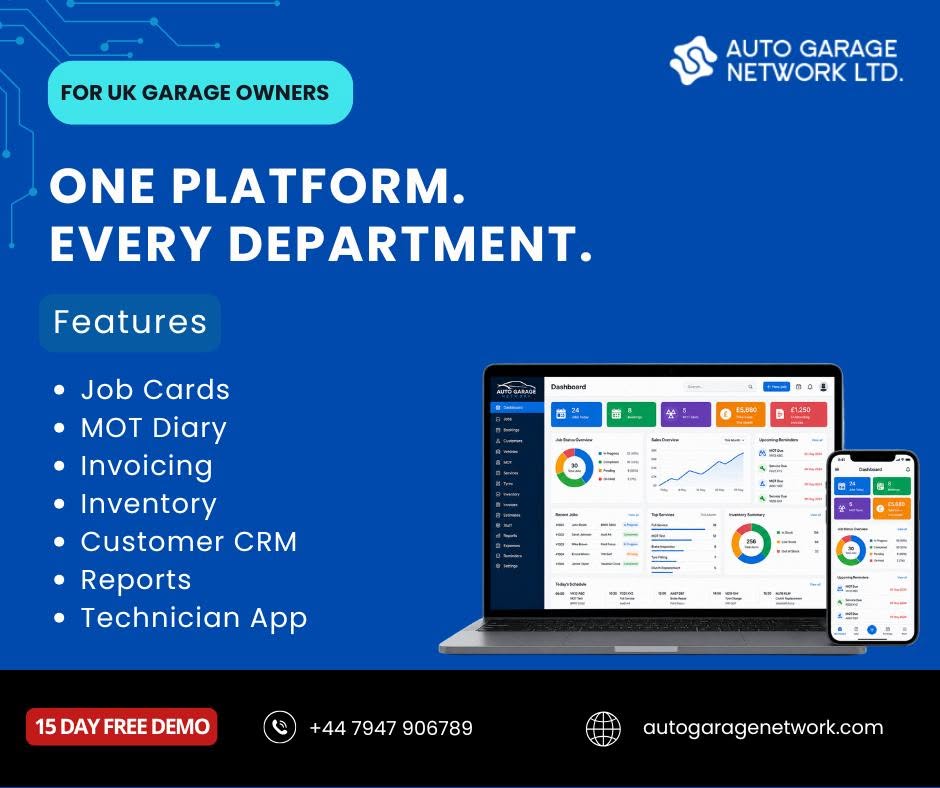
Most people think that running a garage means only fixing a few cars every day, and that’s it; the work is done for the day. However, managing a garage involves much more than vehicle repairs. It all starts with customer bookings that require management; there is a constant need to order new parts, and garages have to send out invoices. Doing all this work manually increases the risk of errors, and many garages still rely on paperwork for such tasks. That is where GMS can help. This blog post explains in detail the role of a GMS for ensuring a smooth workflow and why every garage should adopt it.
Ensuring Organised Booking Records
One of the most immediate advantages of the garage software system is how it simplifies organising service bookings. There is no need for a paper planner anymore, as all the information is conveniently located and easily accessible on a smart device. Also, some programs offer options for vehicle owners to schedule service appointments online. This eliminates the need to make many phone calls to ask whether there is a slot available that fits the driver’s routine. They will have all the information on their device, and they can make the booking for the date and time that suits both them and the garage. It's an excellent time-saving tool that also allows workers to focus more on their tasks and less on managing calls and scheduling appointments. A common issue repair centres face when booking manually is making two appointments at the same time. It can be quite inconvenient for customers and can impact a garage’s image. But this problem is also solved with garage management software, as it will only book appointments for the free time slot.
Sending Appointement Reminders
Many drivers forget that they had a service appointment booked. This missed appointment is not only a waste of time but also of money, as the garage could use that time slot for someone else. But this issue is also resolved with GMS. Most modern garage software packages offer an option for automated text messages or email reminders to remind the customer about their booked appointment. This tiny option reduces the chances of a missed appointment, as every time a service date is near, the customer will be reminded not to miss it. Over the course of a year, even slight savings from missed appointments can add up to major savings, especially for small garages where every appointment and customer counts.
Job Card Creation Feature
Paper job cards often go missing, get lost, or are even misplaced unintentionally. If it happens at the least convenient time, it can be quite problematic, and to solve this issue, GMS has a digital job card creation feature. Job cards made digitally can be a significant advantage as they offer an easy way to organise and retrieve all records. With this, a mechanic can quickly retrieve a complete history of all services and repairs done for the vehicle in question, and they don’t have to look through hundreds of paper records. It also makes it easier to spot repeated problems, past warnings, and parts that were replaced earlier. This gives the mechanic a better idea of the car’s condition before starting the work. Having all the vehicle records in one place also makes the garage look more organised and reliable.
Making Invoicing Faster
Manually drafting invoices and chasing payments can be quite time-consuming, time which workers can spend in a much better and more efficient way. Time at a garage costs money, and the more time wasted, the more money wasted. That is why adopting such software is essential. Most software comes with a built-in invoicing feature that can get labour information and parts used for a job. This automatically generates an invoice without the need to create it from scratch. Some programs also offer card payment options, allowing customers to pay at once with their credit card rather than waiting for a cheque to clear through the bank. It reduces the time between completing the job and being paid. It can be particularly useful for small, independent garages that need to manage their finances.
Conclusion
GMS can simplify and organise daily garage operations. The software helps minimise paperwork and makes handling bookings, reminders, job cards, and invoicing easier through a single platform. It helps both vehicle owners and garages save time while eliminating common errors caused by paper-based records. With vehicles’ digital records, it's easier for the mechanics to know about the past services and repairs on a particular vehicle. It also sends reminders to help drivers avoid missing appointments. Moreover, the quicker billing process will help make payments more organised.