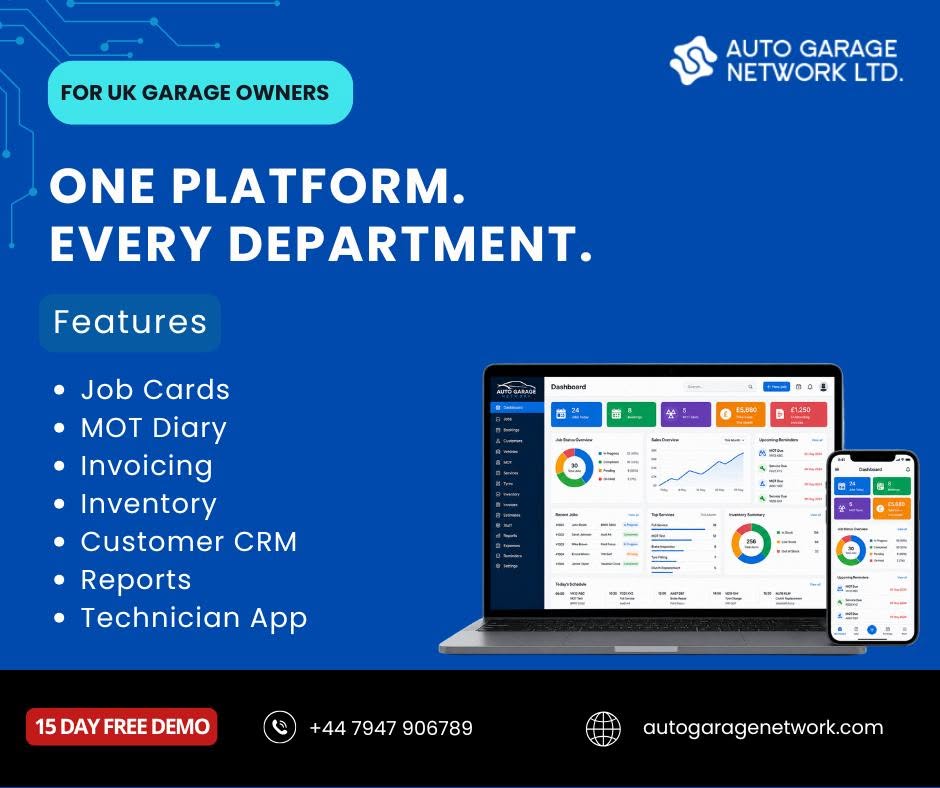
The auto service industry is steadily developing to become fiercely competitive. Garage owners need to juggle several activities, and daily metrics have to be keyed in. From scheduling service appointments and monitoring the service area to revenue tracking and boosting customer engagement, it involves a significant amount of work. This is where the garage management system plays a critical role. A garage management system (GMS) is a software solution. It is created to streamline day-to-day garage operations. This educational blog will explain what GMS is, why regular garages need GMS, and its key features.
What Is GMS or Garage Management System?
A garage management system is an advanced infrastructure platform that helps auto repair and maintenance businesses to digitally conduct their daily operations. It replaces non-automated procedures in a garage. GMS offers features such as billing, customer relationship management, employee management, inventory management, service history management, and reporting. The garage can be a small family-run business or a large authorised servicing centre; GMS can support increasing accuracy and productivity.
Why Does a Garage Need GMS?
A day-to-day garage operation requires many activities to be done at the same time. Garage mechanics need repair details, customers require updates regarding their vehicles, and garage owners expect to receive correct financial details. Overseeing all these tasks manually can create delays, mistakes, and customer grievances. Garage Management Software resolves these daily challenges by offering a systematic process for daily operations.
1. Improved Customer Management
Customers provide a strong base for a prosperous garage business. Accurate customer details have to be maintained to help garages offer efficient service and develop long-term relationships. With GMS, businesses can collect vital customer information such as vehicle type, service history and past repair or replacement data. When a customer visits the garage, the customer service professional can easily access details about the customer and suggest the required services.
2. Easy Vehicle Monitoring
On a busy day, a garage can have a large number of vehicles undertaking various services. GMS simplifies this complex process. With vital vehicle data entered, GMS can help assess each vehicle’s current status. This will include the name of the mechanic assigned, the level of repair progress, and expected completion time. This simple procedural change enhances communication between staff members. It ensures that the service is completed as scheduled.
3. Digital Work Tickets
A few years ago, garages issued paperwork slips that have details of the vehicle to be serviced. In most cases, customers lost this vital work slip. This created confusion, and service got delayed. A digital work ticket is a superior option. Senior garage supervisors can create these digital work tickets. The digital work ticket will have information such as the technician’s name who is doing the repair task and the current status of the repair, and even complaints are added. Thus, a digital work ticket removes confusion.
4. Automated Invoice Processing
A simple invoice error can diminish customer trust and create negative word of mouth for the garage. GMS helps create invoices quickly, and details are accurate. The invoice details of a service are automatically calculated, keeping the vital details in mind. Digital invoicing can be shared with customers quickly. Thus, it will immediately create a superior service experience.
5. Enhanced Employee Management
The operation of a garage is dependent on its technical team and service professionals. Monitoring employee performance is cumbersome. With GMS, owners can easily designate tasks, monitor repair schedules, and encourage employee productivity.
Core Features of GMS
A robust GMS has several core features that are explained below:
-
Customer Relationship Management: CRM tools will support garages in maintaining customer data management. It can include details about the customer, communication records, and service interval reminders. Automated reminders can inform customers about any service that is due in a few days.
-
Flexible Service Scheduling: Customers can schedule a service appointment as per their convenience. This will minimise waiting duration and improve workload management.
-
Repair Schedule Management: The GMS schedules repair requests, assigns an available technician, and checks spare parts usage level and delivery status.
-
Payment Management: An advanced GPS supports several payment methods and accurately organises financial data.
-
Reports and Analytics: It is vital that a garage owner can analyse the current business scenario of the garage. Therefore, different reports can be generated. It will help to organise the garage in a more effective manner to function efficiently.
Advantages of Using GMS
-
Time is saved. Manual work is reduced.
-
Improves customer satisfaction.
-
Reduces errors.
-
Enhances business growth.
-
Data is secured.
Conclusion
Nowadays, a garage management system is no longer a supplementary tool. It has become a vital solution for the vehicle repair and maintenance sector. GMS encourages employee productivity, reduces errors, and helps customers be satisfied.
A garage management system helps a garage deliver excellent service and sustained economic growth. The growing complexities of running a garage on a daily basis will make GMS a tool that garage owners cannot afford to ignore. Thus, investing in the right GMS can help garage owners take their garage business to the next level.